Activity Recognition
Building activity models that adapt to new people with less labeled training data.
People move differently
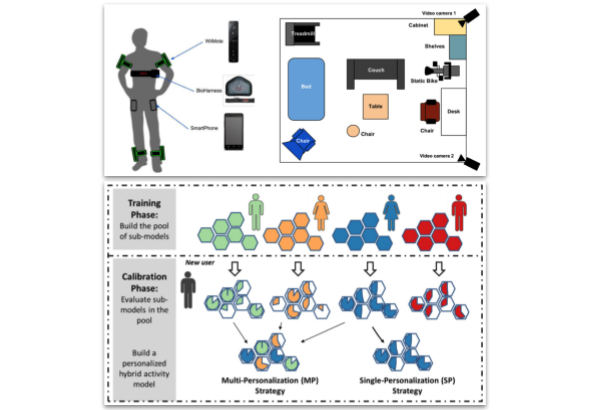
Activity recognition supports context-aware systems, but differences in how people move make it difficult for models to generalize across an entire population. Collecting labeled data from large numbers of people is costly, while training a separate model for every new user makes personalization difficult to scale.
We address this challenge with a semi-population approach: reuse activity models learned from other people and use a small amount of labeled data from a new user to identify the sub-models that best match their activity patterns.
Sharing models across people
The selected sub-models are combined into a personalized recognizer using a hybrid of Bayesian networks and support vector machines. Selection is based on how well each model fits the new user’s activity data, rather than demographic similarity alone.
We evaluated this approach using activity data from 28 participants.
From sensing to evaluation
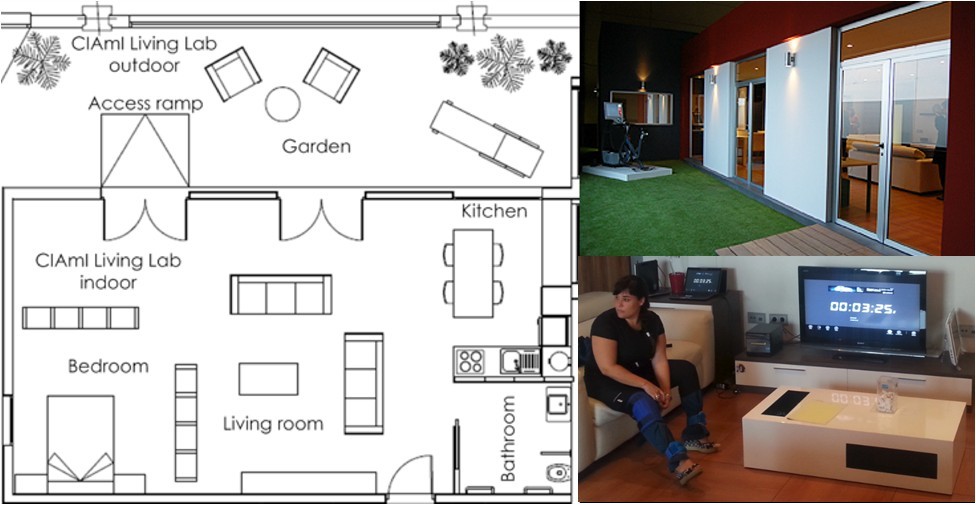
Activity recognizers must also work beyond a controlled training dataset, where sensing conditions and everyday environments vary. Related work addressed this gap by developing a system for ambient assisted living and participating in competitive live evaluations, connecting recognition methods with practical sensing and testing constraints.
Related publications
Full list →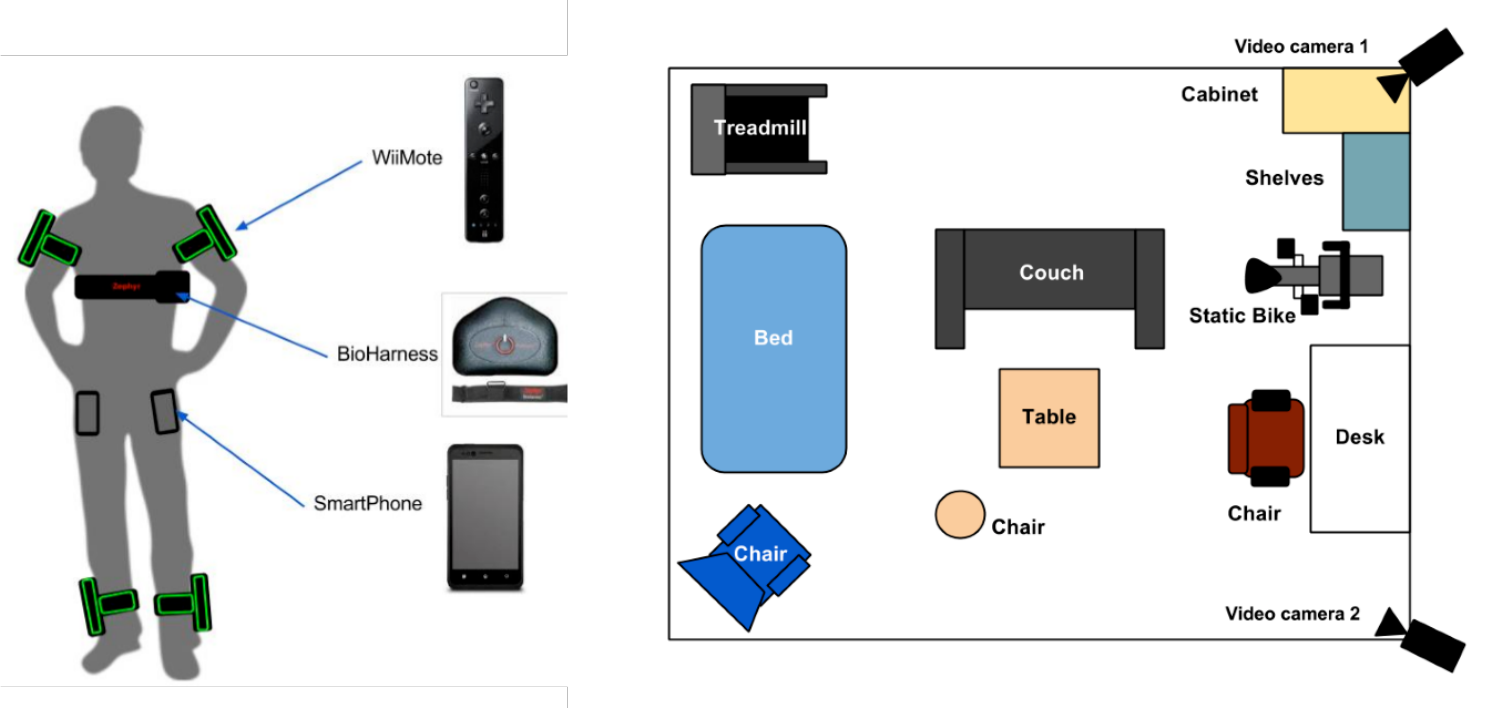 Toward Personalized Activity Recognition Systems with a Semi-Population Approach
IEEE Transactions on Human-Machine Systems · 2015
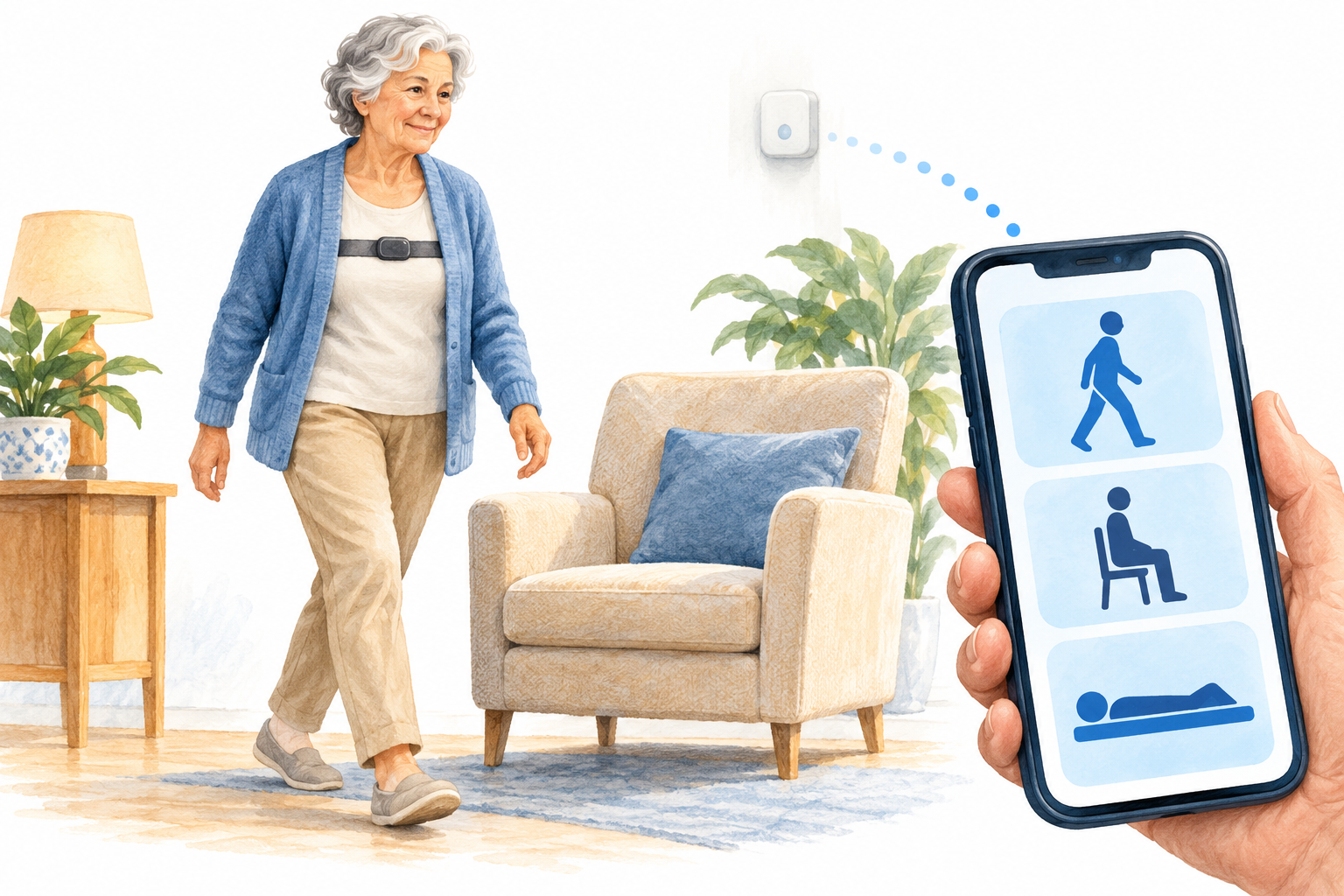
- Competitive Live Evaluations of Activity-Recognition Systems
IEEE Pervasive Computing · 2015